Who Decides What Matters?
How artificial intelligence is challenging the traditional gatekeepers of artistic value
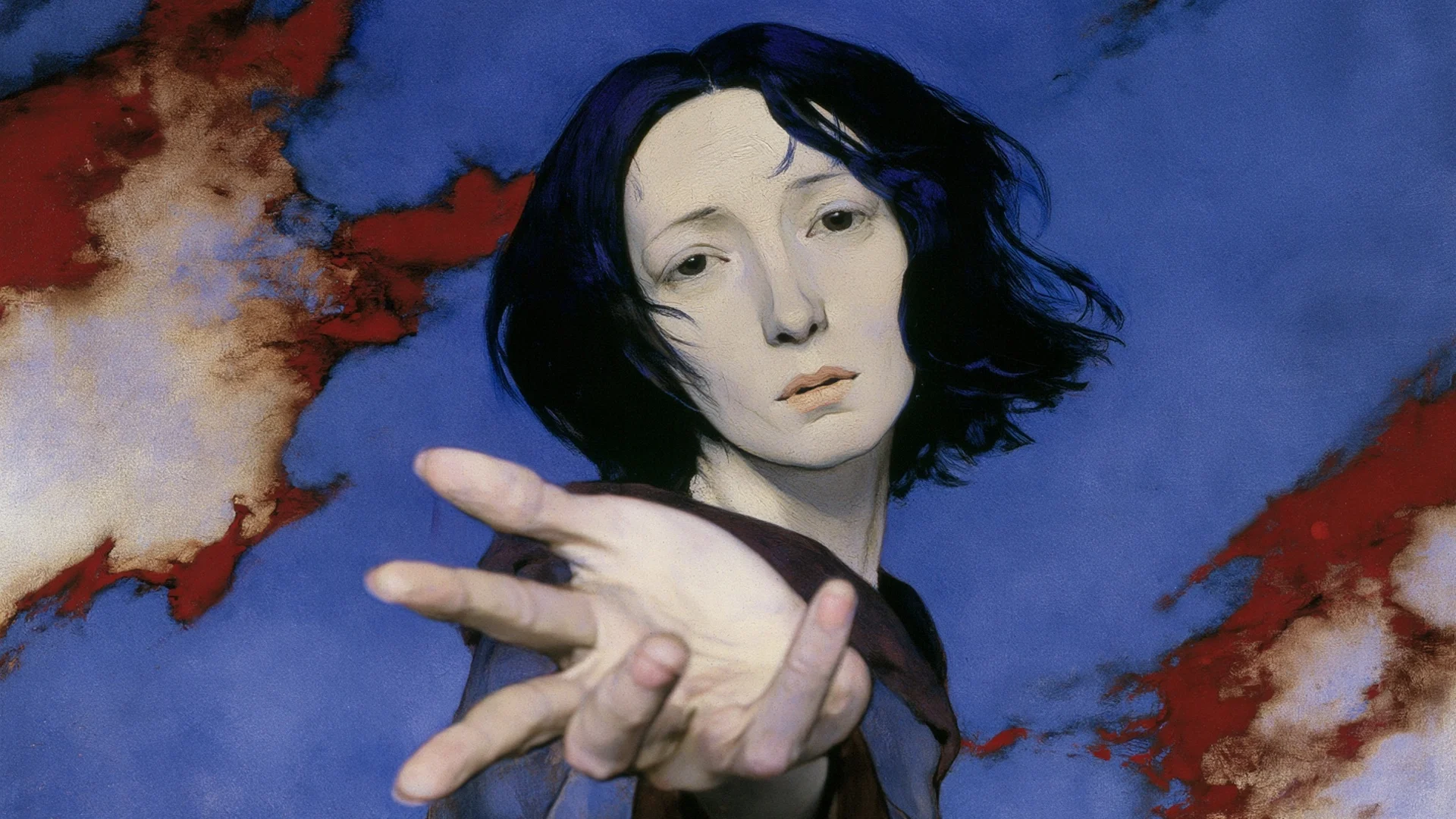
The art world has always been somewhat uncomfortable with new technology, even as it has repeatedly embraced the possibilities those technologies produce. Photography challenged painting's relationship to representation. Digital tools transformed how artists constructed images. The internet altered how work could be discovered, circulated, and sold. Each development raised questions about authorship, originality, and value. Artificial intelligence has brought those questions into sharper focus, but I am not convinced it has fundamentally changed what makes art meaningful. What interests me more is what AI reveals about the systems we have built around art, particularly how we discover it, assign importance to it, and decide what deserves our attention. There is a tendency to frame artificial intelligence as a choice between artistic integrity and technological progress. I find that distinction too convenient. Throughout history, artists have borrowed from one another, responded to existing movements, and adopted new tools. Originality has never meant creating something entirely disconnected from what came before it. I do not believe the use of AI automatically disqualifies something from being considered art. If an artist begins with an original idea and uses technology to develop or realize it, the creative proposition remains important. What changes is the means through which it is expressed. There is, however, a meaningful difference between using technology to advance one's artistic language and using it to reproduce someone else's. When AI systems are trained on vast collections of existing images, often without the clear knowledge or consent of their creators, the boundary between inspiration and exploitation becomes difficult to navigate. The problem is not that artists influence one another. It is that influence can now be automated and reproduced at an unprecedented scale. This creates an uncomfortable contradiction for an industry that places considerable value on authorship while beginning to commercialize technologies that complicate the very idea. In March 2025, Christie's concluded its first auction dedicated to AI art, *Augmented Intelligence*, with sales totaling $728,784. Nearly half the bidders were Millennials or members of Generation Z, suggesting an audience willing to engage with emerging forms of artistic production. Yet the auction also attracted criticism from artists concerned about the unauthorized use of creative work in developing AI systems. Both responses deserve consideration. Commercial success does not resolve the ethical questions surrounding a technology, just as those concerns do not necessarily invalidate every artist who chooses to work with it. I have become increasingly skeptical of the art I encounter on social media, not because I assume every image is artificially generated, but because so much of it appears designed for immediate consumption. Entire profiles can consist of slight variations on the same visual idea, repeated until the aesthetic becomes familiar enough to attract an audience. The work may be polished and technically convincing, yet offer little beyond its initial appearance. Sometimes I wonder whether the objective is to develop an artistic practice or simply identify a visual formula that can be reproduced and monetized. This is not a criticism exclusive to AI. The incentive to create work that performs well online existed long before generative tools became widely available. There is nothing inherently objectionable about artists wanting to make a living. The difficulty arises when commercial visibility begins to substitute for artistic development, and repetition becomes confused with the establishment of a recognizable voice. The contemporary art market has been susceptible to this confusion for some time. Popularity can create the appearance of cultural significance, while the mechanisms that produce popularity are not necessarily capable of identifying artistic merit. An artist may become extraordinarily visible without developing a substantial body of work, while another may spend years investigating an idea and remain largely unknown. Artificial intelligence did not create this imbalance. It may simply make it harder to ignore. This presents a particular responsibility for galleries and curators. I believe cultural institutions should introduce audiences to new technologies, unfamiliar perspectives, and forms of expression that challenge established expectations. Without that willingness, it becomes difficult to imagine how art can progress. A gallery should not simply preserve existing definitions of artistic legitimacy. It should participate in questioning them. At POLARIS, I would not rule out exhibiting work created with AI. I would want to understand the ideas behind it, the artist's relationship to the technology, and whether the work represents an original investigation rather than an imitation of someone else's style. I would also expect transparency about how AI contributed to its creation, not because its presence requires an apology, but because process and authorship are part of what collectors deserve to understand. I suspect many people have a narrower understanding of artificial intelligence than they realize. For some, it is primarily associated with the synthetic images circulating on social media. Yet its creative applications extend far beyond generating pictures from written instructions. Artists can use machine learning to investigate archives, interpret movement, construct interactive environments, and explore patterns that might otherwise remain inaccessible. There is another possibility I find particularly important. For people with physical disabilities or limitations, AI-assisted tools can offer ways to realize ideas that conventional artistic methods might make difficult or impossible. Someone may possess an extraordinary visual imagination without the physical ability to execute it independently. If technology allows that person to communicate an original idea, I find it difficult to argue that the expression is less meaningful because the process has changed. We should be careful about defining artistic legitimacy in ways that privilege physical execution over imagination. None of this diminishes legitimate concerns about intellectual property, environmental impact, consent, or the concentration of technological power. These questions exist within broader political and economic structures, and I understand why people are apprehensive. But fear can also prevent us from examining a technology beyond its most controversial applications. If our understanding of AI begins and ends with the images we dislike online, we risk overlooking its possibilities. For collectors, the conversation becomes more intimate. The art market often describes value through investment, scarcity, provenance, and institutional recognition. These factors matter, but I have always been interested in the relationship between a collector and the work they choose to live with. Critics interpret art. Curators place it within cultural conversations. Galleries introduce it to audiences and contribute to its historical record. Each plays a role in shaping how art is understood. But the person who brings a work into their home establishes a relationship with it that exists beyond institutional opinion. They encounter it repeatedly, allowing its meaning to become part of their own experience. I do not believe a collector needs an institution to explain why something matters personally. Nor do I believe commercial success necessarily establishes artistic importance. An artwork may be deeply meaningful to someone without becoming historically significant. Conversely, a work may become culturally influential without commanding an extraordinary price. Artificial intelligence complicates this relationship, but does not eliminate it. A collector might find genuine meaning in a computational artwork, while another values the physical evidence of an artist's hand. Neither response is inherently more legitimate. What matters is that collectors understand what they are acquiring and can make informed judgments about its significance to them. I am less certain about how these preferences will evolve as AI becomes more sophisticated. Public attitudes remain entangled with anxieties about labor, ownership, privacy, and human creativity. It seems premature to declare what collectors will value most in a market whose relationship with the technology is still developing. What I do believe is that greater technological capability does not automatically produce greater artistic significance. The ability to generate a compelling image is not the same as developing a compelling idea. Yet an artist working with AI may produce something original and affecting, just as someone working in a traditional medium may produce something derivative and forgettable. Artistic importance cannot be determined by the presence or absence of a particular tool. Perhaps this is where the responsibility of the art world becomes most urgent. Galleries must remain curious without abandoning judgment. Critics must understand emerging practices rather than evaluate them exclusively through established categories. Artists must consider both the possibilities and ethical implications of new technologies. Collectors deserve the context necessary to make decisions that reflect their own values. I am not interested in a future where technology determines what deserves our attention simply because it can produce more of it. Nor am I interested in one where artistic legitimacy depends on rejecting the tools through which new generations might express themselves. We should be asking whether a work introduces an idea worth considering, whether it contributes something meaningful to an existing conversation, and whether its creator approached the process with intention. We should also ask whose work made that creation possible and whether the systems surrounding it operate responsibly. Perhaps the question of who decides what matters has never had a single answer. Artists give form to ideas. Galleries and curators create opportunities for those ideas to be encountered. Critics contribute interpretation. Collectors establish relationships that can endure long after an exhibition closes. Over time, culture makes its own judgments, sometimes validating institutional opinion and sometimes reconsidering it. Artificial intelligence enters this process as another means through which ideas can become visible. It should neither be dismissed automatically nor celebrated simply for its technical achievements. What concerns me is not that machines can now make images. It is that we may become so preoccupied with the ability to produce them that we spend less time considering why any particular image deserves our attention. The future of art will not be determined by technology alone. It will be shaped by the questions we continue to ask, the artists we choose to support, and the work we decide is worth living with.