The View From Here
What it means to keep making
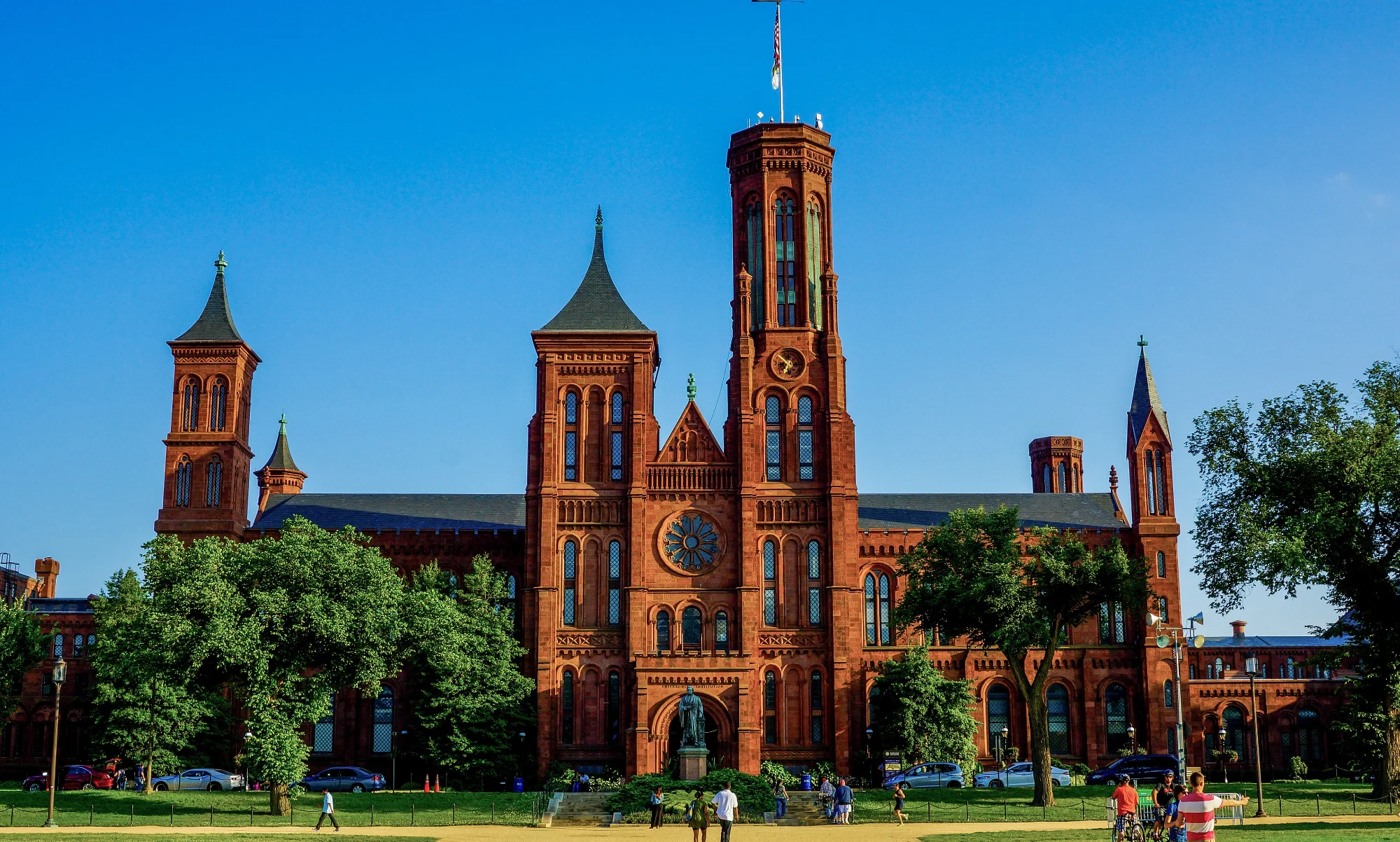
After art class, I would sometimes keep going. I was in college then, studying in the Washington area, and instead of going home or meeting friends, I would make my way to the National Gallery of Art. I had already spent hours thinking about composition, form, color, image-making. I had already looked hard all day. And still, in my free time, I wanted to look some more. That instinct feels important to me now. Long before I thought about creating a gallery, before I became a creative director, before I understood what a curatorial point of view even was, I knew that being around art gave me something I wanted more of. I grew up in Maryland, close enough to Washington, D.C., that the Smithsonian museums were part of the rhythm of childhood. My family would make summer trips into the city, and the National Gallery and the Hirshhorn became two of my favorite places. I did not think of museums as rarefied institutions reserved for certain people. They were simply there, places you could enter and wander through and return to. My first experience of making things was even closer to home. During the summers, my mother would set up projects to keep us occupied, homemade clay, collages made from old magazines, paint. She let us make murals on our bedroom walls. She also made clothes for us, and we would go to fabric stores to choose dress patterns for special occasions. She taught me how to sew and crochet, skills I can still call up from memory. None of this felt like formal training. It was simply how we spent time. Looking back, I can see that I was learning something basic and enduring. Things could be made, arranged, altered, composed. An idea could begin in your head and, with enough attention, take form in the world. In school, I loved art classes. I played violin because we were required to learn an instrument, and I suspect I gave those subjects more of myself than I gave others. For a while, I imagined becoming a sculptor. Then came the practical question of whether I could support myself. Graphic design seemed like a way to remain inside a creative life while also building a career, so I chose design and, eventually, became a creative director. That decision changed the way I learned to look. When you are trained in design, you learn the mechanics of attention. You learn how composition, color, scale, form, and function can direct the eye and shape understanding. You learn that presentation is not neutral. But technical training only gets you so far. Two people can learn the same rules and make completely different things. What remains is taste, perspective, experience, the accumulation of what you have seen, loved, rejected, misunderstood, and returned to. That, to me, is the part that cannot really be taught. A creative director’s job, at least as I understand it, is often to make complicated ideas legible. I may be thinking about layers of theory, visual reference, or cultural context, but the person encountering the work should not need an instruction manual in order to feel something from it. People want a way in. Sometimes they look for something familiar. Sometimes they need context. Sometimes they simply need permission to keep looking. Over the course of my career, I have had the privilege of contributing, in small ways, to culture through creative work. Those moments can be intoxicating. A project goes into the world, people talk about it, and for a brief period you feel as if you have touched something larger than yourself. But cultural relevance can become its own appetite. I have watched creative people begin chasing the next moment of recognition, the next proof that they still matter. I am grateful that I never wanted to build my life around that kind of hunger. What has interested me more, over time, is the work itself and the people making it. When I moved to New York, galleries became one of the ways I learned the city. Coming from Washington, where extraordinary museums were available to me for free, I was not particularly interested in paying admission simply to be around art. Then I realized I could walk into galleries and see contemporary work without buying a ticket. I began making days of it. I would go to brunch in Chelsea, walk from gallery to gallery, and end up at a bar afterward. Gallery openings became part of my social life too. I would get dressed, go out, have a drink, watch people, and feel briefly that I was participating in some version of the New York art scene. Those nights helped me socially. Moving to New York can make you newly aware of yourself. Gallery openings gave me somewhere to go, something to talk about, a reason to walk into rooms and start conversations. And I did not experience galleries as inherently hostile places. Most of the time, someone acknowledged me when I entered. I felt free to look. What stayed with me most was the scale of the work. There was something thrilling about seeing objects that had been given that much room, that much seriousness. I would leave galleries inspired, thinking some version of the same thought. If they can do it, I can. At first, I meant that as an artist or a creative person. Years later, I would mean something else. As much as I loved visiting galleries, I also noticed who was represented inside them. For a long time, I did not see many contemporary artists of color in the major spaces I was visiting. That began to shift more visibly in the 2010s, but the habit of looking for representation had already become permanent for me. It still is. Not long ago, I was looking at the jury panel for an advertising program and realized there was not a single African American woman represented. I notice things like that automatically. As a Black woman who has spent her career in creative industries, I do not really have the luxury of not noticing. There are women of color in leadership positions. There are Black women shaping culture, directing companies, building institutions, making art. But there are still many rooms where their absence is immediately visible to me. That experience has influenced the way I think about artists, although I never wanted Polaris to exist only for one demographic group. What I wanted was to bring my own perspective to the act of looking. No one else has lived my exact life. No one else has walked through the same museums, made the same collages, sat in the same art classes, spent the same years working inside the creative industry, noticed the same absences, developed the same visual instincts. A gallery, I realized, could be a place where all of those experiences converged into a point of view. I do not think the art world needs me to reinvent the gallery. I am suspicious, in general, of the idea that every new thing must announce itself as a disruption. What interests me is perspective. At a certain point in my career and my life, I simply thought, it is time. Let me see what I can do. The practical fears were obvious, money, time, the fact that I already had a career and would have to make room for something serious inside a life that was already full. I worried less about whether I had the proper credentials. The longer I worked creatively, the less convinced I became that authority comes only from following a prescribed path. Creating a gallery is, in part, creating a perspective, and perspective comes from where you have stood. So I returned to the thought I used to have after walking through Chelsea galleries. If they can do it, I can. Polaris became my way of testing that belief, a proof of concept of myself. I chose to build a gallery because a gallery can be a living thing. It can change, absorb new voices, and reflect something outward almost immediately. Beginning online also meant I would not be limited by a physical room or even by the amount of time I personally had to travel and see work. There are artists I can encounter now whom I might never have found otherwise. There are collectors who can walk into the gallery without walking anywhere at all. There are curators who may encounter an artist in an exhibition and imagine that artist inside an entirely different future. I still imagine Polaris having a physical space one day. I would love to gather people in person, perhaps quarterly, so artists, collectors, and curators can stand in the same room and celebrate the work together. But I do not see the digital gallery as a temporary compromise. It has its own possibilities. The internet has radically increased visibility while also complicating the meaning of it. Some artists are extraordinarily good at presenting themselves online. Others are not. Social fluency and artistic depth are not always the same thing, yet the systems through which we discover work can easily confuse them. I often find myself asking the opposite of the question we are usually encouraged to ask. Not, How has this talented artist been overlooked? but, Why is this work receiving so much attention when the work itself does not seem fully developed? Sometimes the answer is simply that one artist understands social media better. That does not make online visibility illegitimate, but it does make discernment more important. I want Polaris to be one place where judgment is allowed to matter, where the question is not only who has the largest audience, but what the work does when you actually spend time with it. I want an artist who comes to Polaris to be able to picture their own work being treated seriously, presented well, photographed well, written about thoughtfully, marketed with care. I want a collector to encounter something and think, I have never seen this before. I want to live with it. And I want curators to find artists who unlock something in their own thinking. If Polaris can do those things, it is doing something useful. Open calls became important to me for a similar reason. I wanted to offer something that I did not always feel had been offered to me, a point of access. But I am also realistic about what an opportunity is. Nothing is really given to an artist except the opportunity itself. After that, the artist has to build. One exhibition cannot make a career. One curator cannot create permanence. One gallery cannot substitute for years of practice, development, relationships, and persistence. The door can open; the artist still has to walk through it. I also think about what happens after that door opens. The art world can still operate through relationships and proximity, who knows whom, who can make an introduction, who already belongs to the right social circle. And there is another issue that troubles me, artists being forced to wait for money they have already earned. A gallery relationship should not require an artist to wonder indefinitely when they will be paid. I want Polaris to operate with a sense of responsibility toward artists, including financially. If an artist sells work through the gallery, I want what belongs to that artist to reach them as quickly and cleanly as possible. That is not innovation. It is respect. For all of my criticisms of the art world, I am not interested in rejecting its traditions. I admire institutions that have survived long enough to give us access to things that might otherwise exist only as reproductions in an art history book. There is still nothing quite like seeing a work in person that you have known only from a page. Scale changes it. Texture changes it. Your body in relation to it changes it. I want Polaris to carry some of that seriousness forward. I also want it to help artists form relationships with curators that extend beyond Polaris itself. I do not want an artist’s relationship with the gallery to become a closed loop. The best outcome may sometimes be that someone discovers an artist through Polaris and then opens another door somewhere else. Preservation has always mattered to me, although I did not always call it that. When I first decided I wanted to be a graphic designer, I was making collage art. Collage required collecting, magazine clippings, scraps, ephemera, fragments that looked disposable until I decided they belonged together. To make the work, I had to save things. Maybe that was the beginning of my instinct to archive. With Polaris, I want exhibitions to remain accessible rather than disappearing the moment a show closes. I want the artist, the work, the curatorial writing, the conversations, and the context around an exhibition to remain part of a record. Not because everything needs to be preserved forever, but because disappearance shapes history, too. What remains available influences what later generations believe mattered. The first time Polaris stopped feeling like an idea and began feeling permanent was when I created the call for “Founding Artists.” The phrase changed something. A founding artist implies a beginning, but it also implies a future. You cannot really found something that you imagine disappearing next month. By using that language, I was making a promise to myself that this was not simply another project. Around that time, a couple I know found the Instagram account I had been quietly building for Polaris. I was not ready for anyone to see it yet. They were excited. That was all. There was no grand unveiling, no critic, no institution, no declaration that the gallery had arrived. Just two people saying, essentially, This is exciting. Sometimes that is enough. The name Polaris had come earlier. The North Star carries particular meaning for me as a Black person because of its historical relationship to freedom and navigation, but its symbolism reaches across cultures. What interests me most about it is perspective. You can stand beneath the North Star in the middle of a city and barely see it through the light pollution. You can stand somewhere rural and see it clearly. You can be in a place where clouds obscure it altogether. Your view changes. The star does not. I think a great deal about that now. Every person comes to art from a particular vantage point. A collector brings a life with them. A curator brings a life with them. An artist certainly does. And I bring mine. Polaris is not an attempt to pretend that I can stand outside of those experiences and make some perfectly objective judgment about what deserves to be seen. It is almost the opposite. It is an acknowledgment that I am looking from somewhere. What I hope, over time, is that people learn to trust the view. My ambition for Polaris is not to become trendy. Trend is temporary by definition. I want the gallery to evolve into something larger, perhaps a creative development space, perhaps an institution that can help artists grow in ways I cannot completely anticipate yet. I would like collectors to trust my eye. I would like artists to trust it, too. That kind of trust cannot be declared. It has to be accumulated slowly, choice by choice. Perhaps that is why this project feels so personal. Polaris validates many of the things I have believed about myself over the years, that I can recognize an image, organize an idea, build a visual world, identify what feels distinctive, help other people see what I see. It brings together skills I once considered separate, design, direction, taste, curation, storytelling, archiving, looking. And somewhere beneath all of those things is the student leaving art class and heading toward the National Gallery, still wanting to be around art after spending the entire day making it. For years, the thought I carried out of galleries was simple. If they can do it, I can. I used to think that sentence was about possibility. Now I think it may have been about permission. Polaris is what happened when I stopped waiting for it.